
DaVita Infection Reporting Tool
Simplified infection tracking for nurses by unifying fragmented workflows into a single system
Date: 2021
Role: Lead Product Designer
The Problem
DaVita nurses are responsible for tracking patient infections related to dialysis treatment — a critical, high-stakes workflow.
Their existing process relied on a series of bookmarked Microsoft SharePoint links with no cohesive structure or user experience. Nurses had to memorize which tools to use and in what order, creating inefficiencies, frustration, and a steep learning curve for new team members.
This fragmented system pulled focus away from patient care and introduced unnecessary complexity into an already demanding workflow.
Why this was a challenge
Fragmented workflows across multiple systems
No clear or consistent process for completing tasks
High reliance on institutional knowledge (bookmarks, order of operations)
High-stakes healthcare environment requiring accuracy and speed
Multiple roles (nurses, administrators) interacting with the same data
Research & Key Insights
I partnered with a UX researcher and conducted on-site observations within a DaVita clinic to understand how nurses interacted with the system in real-world conditions.
Key findings:
Nurses relied heavily on memorized workflows rather than intuitive navigation
The process lacked a clear, linear structure
Legacy Microsoft tools created friction and slowed down task completion
New hires faced significant onboarding challenges due to system complexity
Nurses were forced to divide attention between patient care and navigating inefficient tools
Approach
The goal was to replace a fragmented, non-linear workflow with a unified system that supported clarity, visibility, and efficiency.
Key design considerations:
Clearly identify assigned clinics and patients for each nurse
Provide a centralized, scannable list of patient data and metrics
Enable visibility into who addressed each case and when
Capture infection details and treatment information in a structured way
Align with DaVita’s existing design system for consistency
The primary challenge was translating a loosely defined, manual process into a structured, intuitive workflow.
Solution
We designed a unified desktop application that consolidated infection tracking into a single, cohesive experience.
The new system:
Centralized all patient infection data into one interface
Introduced a clear, linear workflow for logging and tracking cases
Provided visibility into team activity through timestamps and user attribution
Integrated relevant patient metrics directly into the workflow
Eliminated reliance on bookmarks and disconnected tools
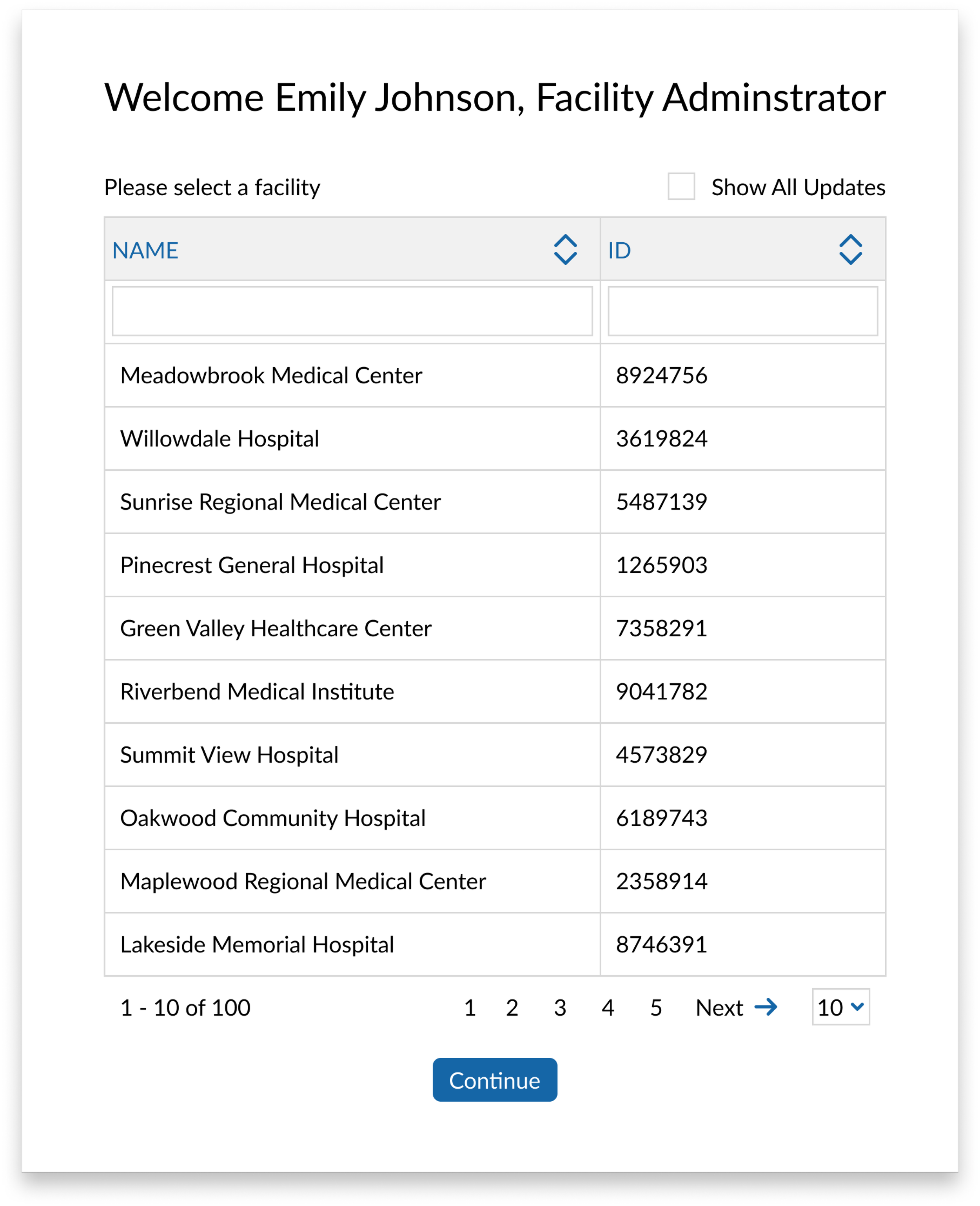
Choose Facility
Nurses have access to all of the facilities assigned to them in a cohesive list.
If updates across all facilities are requested then the nurses can select the “Show all Updates” Checkbox.
Home Dashboard
A comprehensive patient list of all assigned to that nurse.
Column with visual indicator that a patient has been, or hasn’t been addressed.
Name and time-stamp of nurse who last addressed that patient for auditing purposes.
Action button allowing the nurse to log any infections or update the patient’s record within the system.
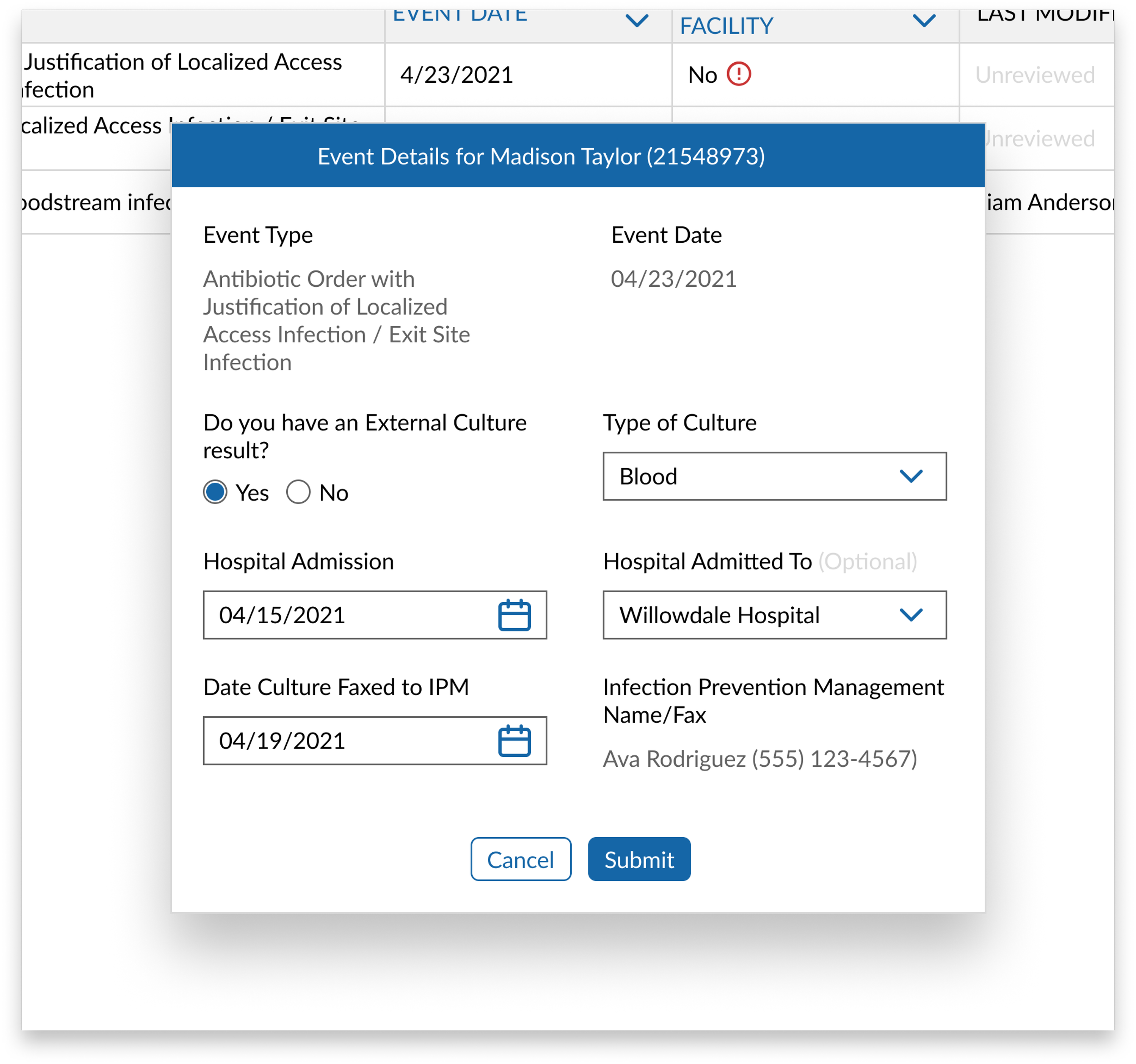
Event Details Modal
From the “Review” button the nurse can update any patient information and log when the culture was sent their manager(s).
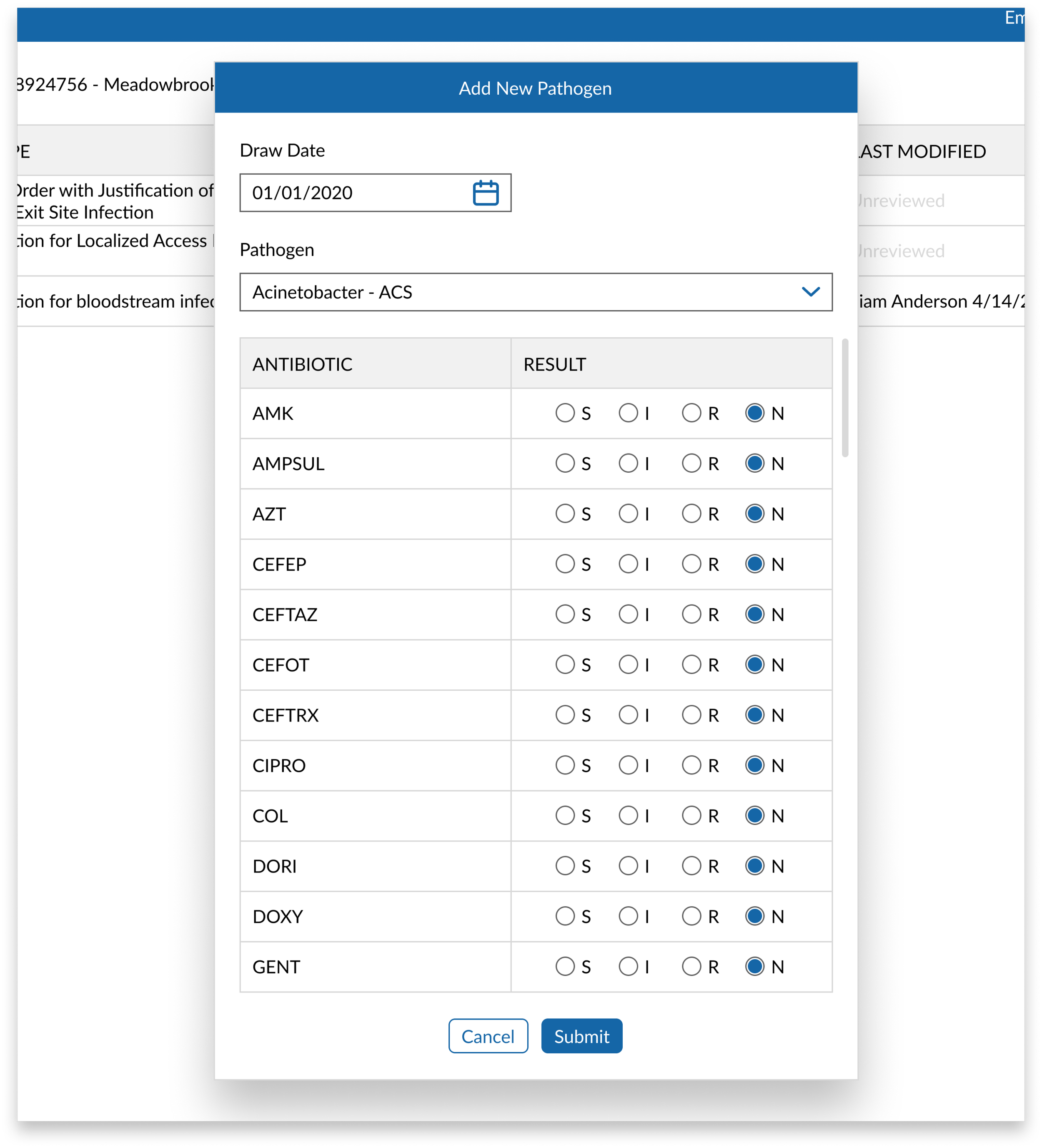
Add Pathogen Modal
If the nurse has an external culture result they may log the pathogen from a list as well as the antibiotic used to treat it.
(Click to play)
Testing & Iteration
I conducted moderated usability sessions with 6 participants to validate the new workflow.
Key insights:
Missing Metrics: An administrator dashboard containing critical metrics was not included in the initial design
Sorting & Filtering: Users needed the ability to quickly sort and filter patient data
Iterations:
Integrated missing administrative metrics into the main dashboard
Added sorting and filtering functionality to improve data navigation
Outcome
The redesigned system replaced a fragmented, manual process with a unified, scalable solution.
Results:
Streamlined infection reporting into a single, cohesive platform
Improved visibility into patient data and team activity
Reduced reliance on legacy systems and manual coordination
Supported successful internal audit outcomes
Enabled nurses to focus more on patient care rather than system navigation